Ryan Bever - A Former Spaulding Apprentice.
Storytelling Series - July 2026
I was very lucky to grow up in a sailing family, I got thrown into dinghies early and am still chasing that feeling of independence that you only get as a kid in a dinghy. When I started racing keelboats after COVID, something clicked and I knew what I needed to do. Until a good friend working at a San Francisco sailing company referred me, I had no idea you could actually make money sailing. Surrounded by mariners with almost unbelievable life stories and time to kill on our well-practiced routes around the Bay, I soaked it all in and felt at home.
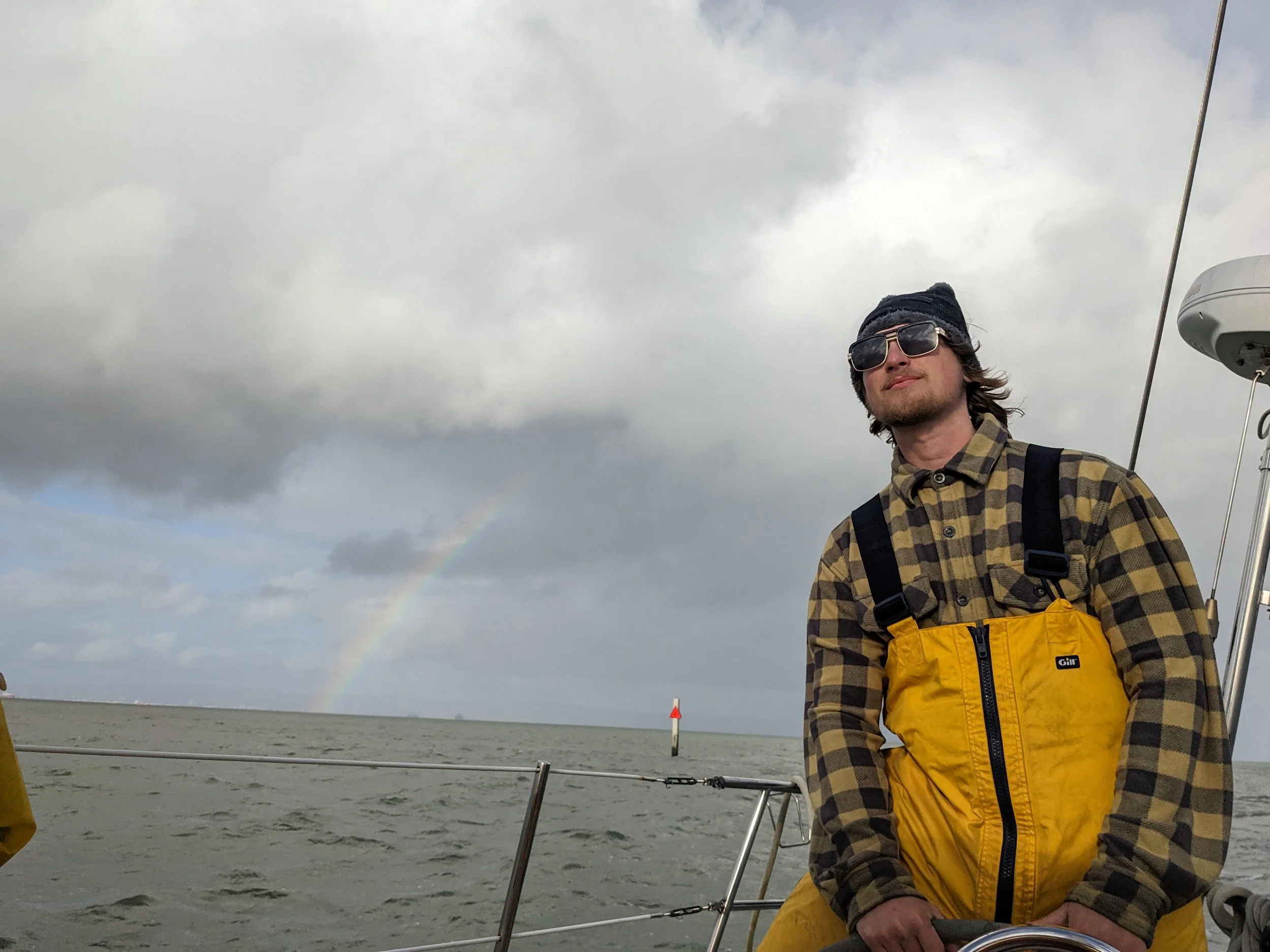
With tip money and my savings from flipping burgers during college, an old Islander 36 became mine and I got my first taste of the marine trades. How many people can say their first job was replacing their diesel's injection pump? That—and learning how my diesel's cooling system works—set my resolve toward learning all I could about how to fix boats.
I learned about Spaulding through my mother, who took me sailing even before I was born. I had dreams of a circumnavigation and knew that I lacked the skills to keep the boat going on my shoestring budget. So Spaulding was for me. My good friend Chris was first to heartily greet me, as I walked up to that big white gate. We walked into the yard, admiring the worn plank floor, the high ceiling with its skeletal hulls, and up the stairs to the antiquarian library where I met my future coworkers: Karsten, Rob, Curtis, and Ocean.
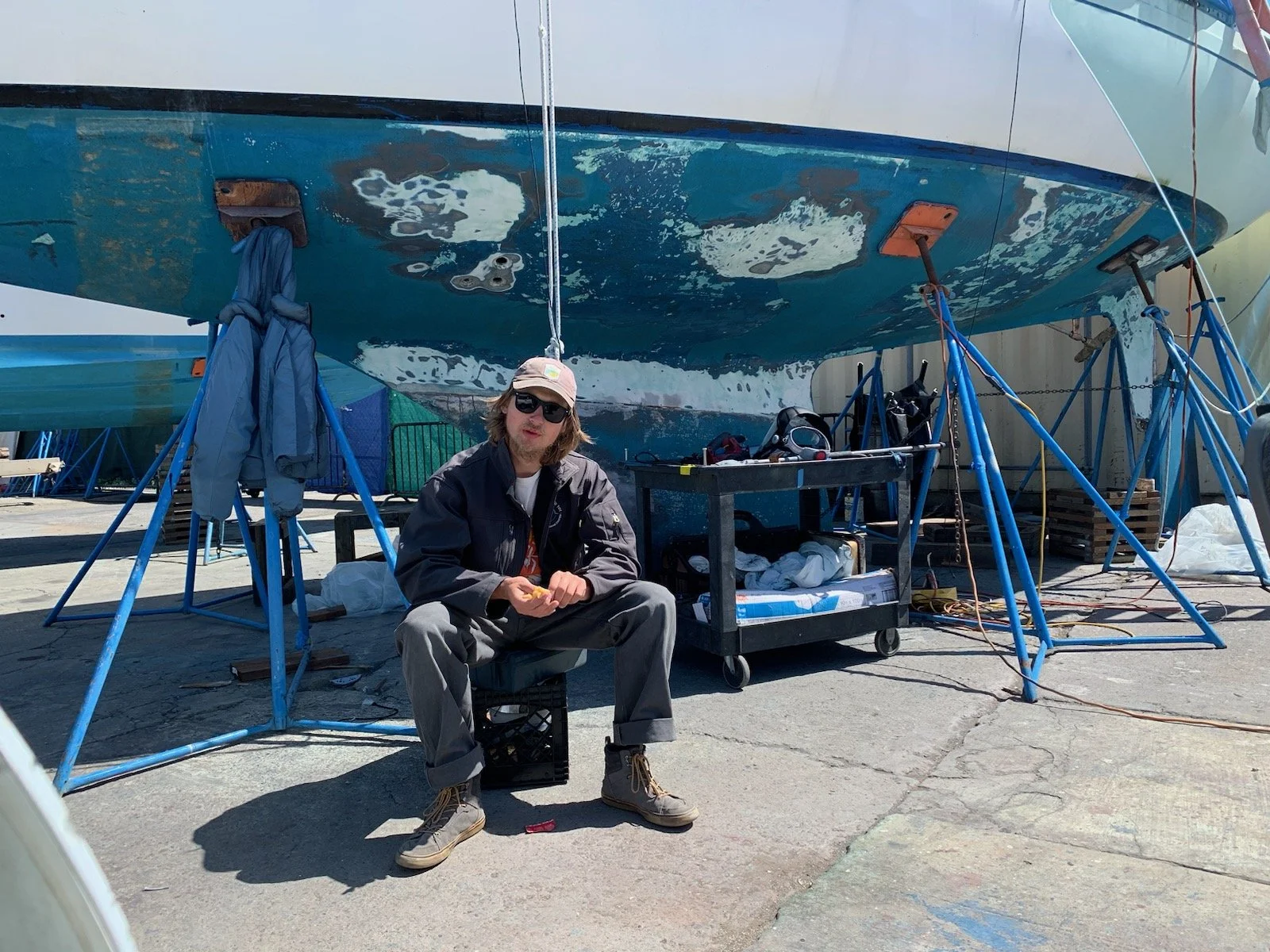
I learned a lot at Spaulding: a new appreciation for craftsmanship, hulls, and running gear and to listen to everything that José says—the anticipation of a haul, setting straps, the gravity of these huge masses as we moved them through the air. It was hard-won knowledge. Sanding and painting boat bottoms all day isn't always fun! Also, I was commuting about 20 miles a day by bike from the City, and life on an old clapped-out race boat was an ascetic existence. I hit a low point when my starter gave out, cancelling the bottom job I had planned over the Christmas break.
Looking back, I can appreciate how these experiences shaped me. The hardships were character-building, the lack of structure made everything that we were taught more urgent and important, and all the beautiful moments and good times stand out. I received a much-needed humbling, made good friends, and earned an education. I passed my ABYC electrical test at Spaulding after being taught by Pete Rowland, machining with the excellent John Long, rigging with Jason Winkel, along with myriad other skills from various teachers. I also became a captain outside the program and took a course to earn a 50-ton master license.
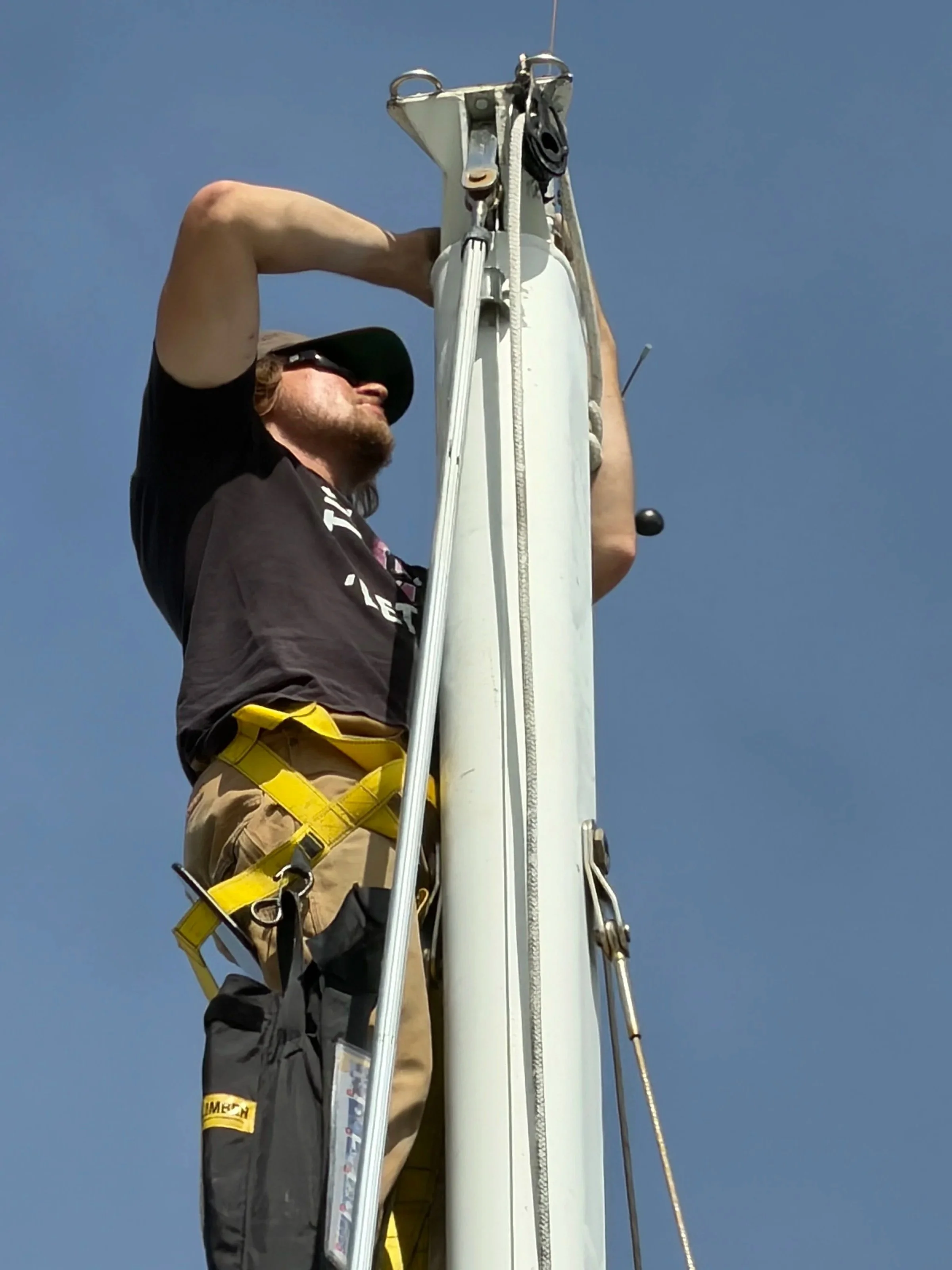
I left Spaulding for San Francisco Boat Works. Coming on as a new technician, I specialized in rigging and worked on whatever else they threw at me. I learned and grew my tool habit under experienced technicians, using many skills that I learned at Spaulding. I even did a little woodwork on Ocean Queen.
At the end of last year, I left SFBW (as head rigger) to start my own business (reach out at: bayboatrepairandrigging@gmail.com). Doing a re-rig in Sausalito, I came full circle. Needing an aluminum mounting plate, I stepped back into the yard that had given me so much and found the same friendly, thriving community that I remembered. It had been a while, so I was deeply touched by the welcome that I received. Matt and José were kind enough to give me some scrap plate and let me use the old band saw to cut it and shape it to size.
Spaulding will forever be a touchstone in my life, a place to look back at and take stock and to remember where I come from and who shaped me. To me Spaulding is a community. Whether old friends or new, we all share the same love of craft, of boats, and for that yard. That's what Spaulding is all about.